
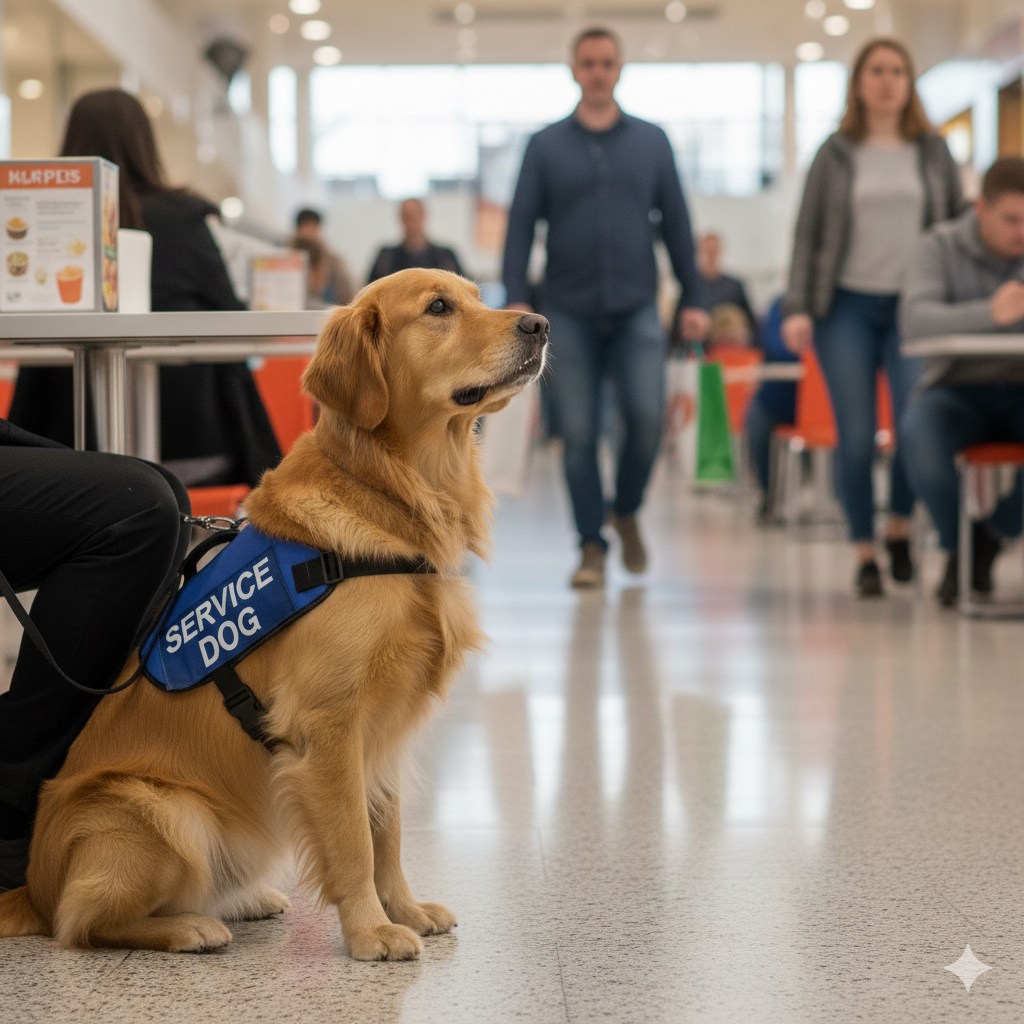
“It happens to the best of us. You are walking down the aisle of a grocery store, or perhaps waiting for a flight at the airport, and you see them: a beautiful, well-behaved dog walking calmly beside their owner. Your first instinct is probably to smile, make kissy noises, or reach out for a quick head scratch. After all, dogs are practically magnets for human affection. However, giving in to that friendly impulse and distracting a working dog is actually a significant safety hazard.
If that dog is wearing a harness or a vest, reaching out is the absolute wrong move. These animals are not pets enjoying a leisurely stroll; they are highly trained medical equipment performing crucial, often life-saving tasks for their handlers.”
While it might seem like a harmless, friendly gesture, distracting a working dog is actually a significant safety hazard. These animals are not pets enjoying a leisurely stroll; they are highly trained medical equipment performing crucial, often life-saving tasks for their handlers.
In this comprehensive guide, we are going to dive into the polite but firm reasons why you should keep your hands—and your attention—to yourself when you encounter a service dog. We will explore the hidden dangers of breaking their focus, the “Please Don’t Pet” protocol, and how you can be a better ally to the working dog community.
What Exactly Does a Working Dog Do?
To understand why a distraction is so dangerous, we first need to understand the profound responsibilities resting on these dogs’ shoulders. A working dog (specifically a service dog) is individually trained to do work or perform tasks for a person with a disability.
This is vastly different from an emotional support animal, which provides comfort simply by being present. Working dogs are constantly “on the clock.” Their jobs are complex and varied, including:
-
Guide Dogs: Navigating individuals with visual impairments around obstacles, traffic, and stairs.
-
Medical Alert Dogs: Detecting subtle changes in their handler’s body chemistry to warn them of an impending seizure, diabetic low, or cardiac event.
-
Mobility Assistance Dogs: Providing balance, retrieving dropped items, or pulling wheelchairs.
-
Psychiatric Service Dogs: Interrupting panic attacks, performing deep pressure therapy, or clearing rooms for veterans and trauma survivors with severe PTSD.
Because these tasks require intense concentration, even a momentary lapse in focus can have catastrophic consequences for the handler.
The Hidden Dangers: Why Distracting a Working Dog is a Safety Hazard
You might be thinking, “It’s just one little pat on the head. How bad could it be?” The truth is that a single pat can trigger a dangerous chain reaction. Here is exactly why distracting a working dog is a risk you should never take.
1. The working dog hazard: Missed Alerts Can Be Life-Threatening
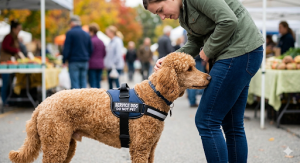
For individuals relying on medical alert dogs, their dog is their early warning system. Let’s say a diabetic alert dog is busy sniffing the air to monitor their handler’s blood sugar. “You might make eye contact, whistle, or reach out to pet the dog. This instantly shifts their attention away from the handler.”
In that brief five-second window of distraction, the dog might miss the subtle chemical shift indicating a rapid drop in blood sugar. Consequently, the handler loses their advanced warning and could collapse, sustain a traumatic injury, or slip into a medical crisis. When you distract a working dog, you are actively interfering with a vital piece of medical equipment.
2. Distracting a Service Dog Endangers the Handler in Motion
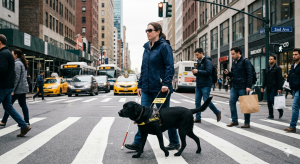
Guide dogs and mobility assistance dogs rely on uninterrupted concentration to navigate the world safely. A guide dog is constantly assessing the environment for tripping hazards, overhead obstacles, and oncoming traffic.
If a well-meaning stranger calls out to the dog from across the crosswalk, the dog might turn its head. In that split second, they could fail to stop at a curb or miss an approaching vehicle. The handler places profound, absolute trust in their dog to keep them safe. By drawing the dog’s focus, you compromise the handler’s physical safety.
3. The Ripple Effect of “Just One Pet.”
Many people justify their actions by thinking they are the only ones bending the rules. However, people with service dogs navigate public spaces every single day. Imagine a single trip to the mall. Ten different people might try to secretly pet the dog or offer a treat. Others might make baby noises. The dog’s training quickly begins to erode.
Dogs are intelligent, social creatures. If they consistently receive reinforcement and affection from strangers while in gear, they may eventually seek that attention on their own. This phenomenon can ruin thousands of hours of [specialized training]. It also wastes tens of thousands of dollars. Ultimately, it forces the dog into early retirement. The handler is then left without their necessary aid.
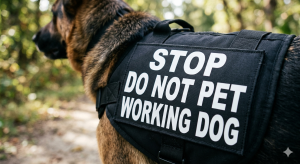
The “Please Don’t Pet” Protocol: How to Act Around Service Dogs
Now that we understand the gravity of the situation, how should we behave when we see a working dog in public? The rules are incredibly simple, though they do require a bit of self-control.
Rule 1: Ignore the Dog Completely
This is the golden rule. When you see a dog in a vest or harness, pretend the animal is invisible. Never touch them. Do not talk to them. It is also crucial to avoid making eye contact. Furthermore, refrain from whistling, clicking your tongue, or making kissy noises.
Finally, never attempt to take stealthy photographs of the dog. Even pointing a camera or stopping to stare can be distracting and makes handlers feel incredibly uncomfortable and scrutinized.
Rule 2: Speak to the Handler, Not the Dog
If you need to interact with the service dog team—perhaps you are a cashier ringing them up or a waiter taking their order—direct 100% of your attention to the human.
Treat the handler with the same respect and normalcy you would offer anyone else. Do not ask them, “What is wrong with you?” or demand to know why they have a service dog. Under the Americans with Disabilities Act (ADA), their medical history is private.
Rule 3: Do Not Offer Food or Treats
Diet is tightly controlled for working dogs. Unexpected treats can upset their stomachs, causing them to need bathroom breaks at inappropriate times or to become ill enough to miss work. Moreover, offering food is the ultimate distraction. Never feed a service dog.
Rule 4: Control Your Own Pets
If you are out in public with your own pet dog and you spot a service dog, give them a wide berth. Keep your pet on a short leash and do not allow your dog to run up and “say hi.” A reactive or playful pet can easily distract a working dog. Worse, it could cause an altercation that traumatizes the service animal.
What If You Have Already Distracted a Working Dog?
We are all human. Sometimes the impulse to pet a cute dog overrides our logical brain before we even realize what we are doing. If you have accidentally distracted a working dog, the best thing you can do is handle it gracefully.
Do not make a dramatic scene or launch into a five-minute apology—this just detains the handler and causes further distraction. Simply pull your hand back immediately, say a quick, polite “I’m so sorry, I wasn’t thinking,” and step away to give the team their space back.
Handlers deal with the public all day, every day. A quick apology and an immediate correction of your behavior will be vastly appreciated.
Educating the Next Generation on Working Dog Hazards
One of the most powerful things you can do to support the service dog community is to pass this knowledge on. Children are naturally drawn to animals, and they don’t inherently know the difference between a pet and a medical aid.
Take the time to explain the concept of a working dog to your children. Teach them that a vest means the dog is “at work” and cannot be bothered. We must educate young people early. This helps create a much better future. Handlers will finally be able to navigate society without constant anxiety. They will no longer have to defend their medical equipment from well-meaning hands.
Conclusion: Respecting the Vest
The bond between a handler and their service dog is a beautiful, life-changing partnership based on trust, training, and intense focus. These dogs provide independence, confidence, and literal life-saving interventions for millions of people worldwide.
While it is entirely natural to admire these incredible animals, we must admire them from afar. Remember that distracting a working dog is never harmless. By following the “Please Don’t Pet” protocol, keeping your distance, and spreading the word, you are doing your part to keep handlers safe and allowing these amazing dogs to do the jobs they were born to do.
Next time you see a working dog, give them the greatest gift of all: your complete and total indifference.
