
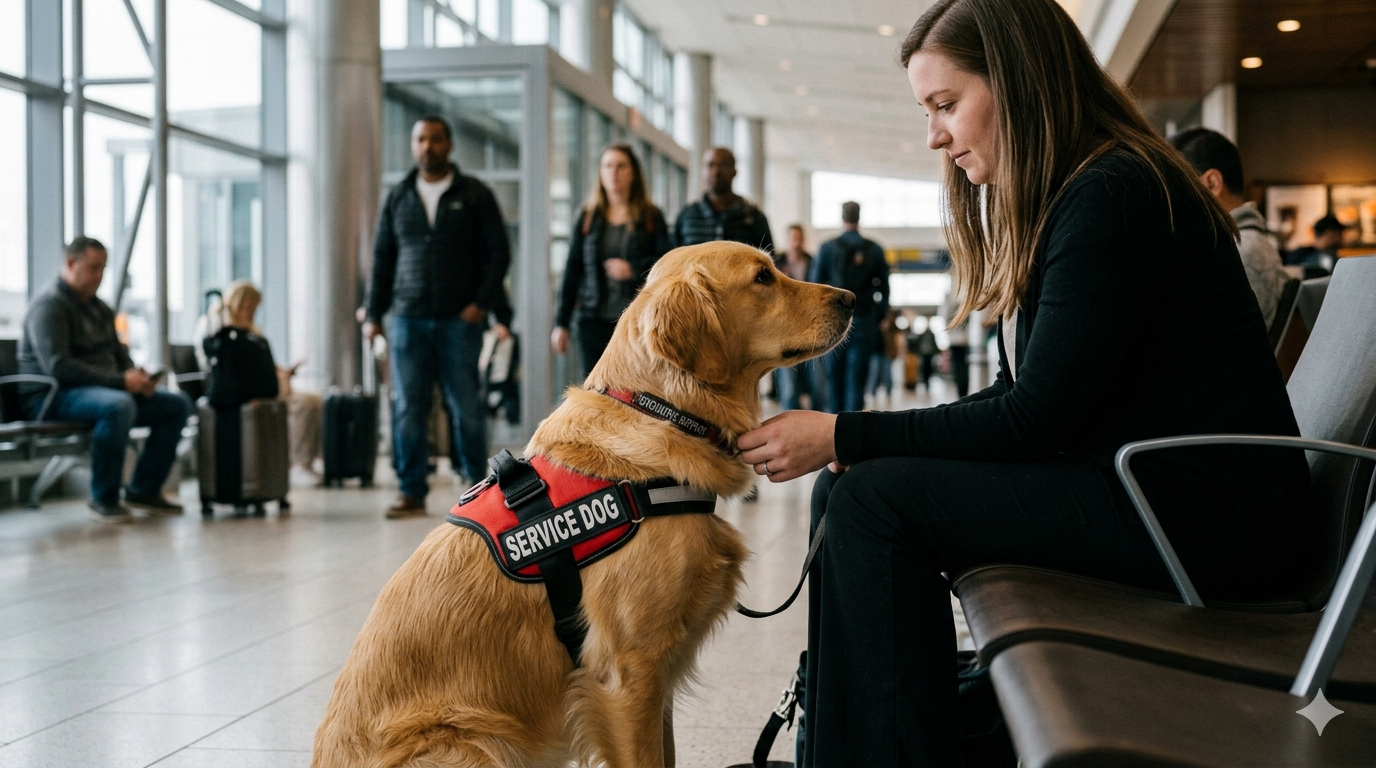
If you navigate the world as a survivor of trauma or live with a chronic mental health condition, you have likely asked: What is a psychiatric service dog, and could one help me reclaim my life? In the landscape of modern mental health recovery, these specialized canine partners serve as a bridge back to the world for those with “invisible” disabilities. As their presence in public spaces grows, so does the confusion surrounding their legal status and their specific role in a medical treatment plan.
To truly support those who rely on these animals, we must understand the rigorous standards that define them. A psychiatric service dog (PSD) functions as a highly trained working professional, not a pet. Their presence fulfills a critical medical necessity for their handlers.
Defining the Psychiatric Service Dog (PSD)
The Americans with Disabilities Act (ADA) defines a service animal as a dog that an individual has individually trained to do work or perform tasks for the benefit of an individual with a disability. For a psychiatric service dog, these tasks must directly mitigate the effects of a mental health condition, such as PTSD, major depressive disorder, or severe panic disorders.
The definition of what a psychiatric service dog is rests on two essential pillars:
-
The Disability: The handler must possess a mental health impairment that substantially limits one or more major life activities (e.g., sleeping, concentrating, or interacting with others). The National Institute of Mental Health (NIMH) notes that PTSD can profoundly disrupt a person’s biological and social functioning.
-
The Trained Task: The dog must take a specific action when a symptom occurs. This “work” separates a service dog from a companion. If the dog’s mere presence makes the person feel better, the animal does not meet the legal criteria for a service dog.
What a Psychiatric Service Dog Is: The Life-Saving Tasks
We best understand the role of a PSD through the specific tasks they perform. These actions represent clinical interventions rooted in neurobiology and behavioral conditioning rather than simple “tricks.”
Deep Pressure Therapy (DPT)
The dog performs Deep Pressure Therapy, one of the most essential tasks for PTSD and panic recovery. The dog uses its body weight to apply firm, sustained pressure to the handler’s lap, chest, or legs. Much like a medical weighted blanket, DPT engages the parasympathetic nervous system. This action slows a racing heart and brings a spiraling nervous system back to a state of calm.
Nightmare Interruption
For those who face trauma, sleep often becomes a battleground. A PSD recognizes the early physical signs of a nightmare—such as thrashing, vocalization, or distressed breathing—and gently wakes the handler. This interruption provides an immediate “reality check.” It allows the survivor to return to a state of safety before a full-blown flashback takes hold.
Proactive Alerts and Interruption
A service dog senses the subtle physiological shifts—like muscle tension or shallow breathing—that precede a panic attack. By nudging, pawing, or leaning against their handler, the dog interrupts the escalating trauma loop. This provides a “buffer” moment where the handler can implement coping strategies before symptoms become overwhelming.
Environmental Buffering and “Cover”
In public spaces, hypervigilance (the constant scanning for threats) exhausts the handler. A PSD creates a physical buffer zone by “blocking” (standing in front) or “covering” (standing behind) the handler in crowds. This increase in the handler’s felt sense of safety reduces the physiological “startle” response.
What a Psychiatric Service Dog Isn’t
We must draw clear lines around what these dogs are not to honor their hard work and the needs of their handlers. Misrepresenting animals causes legal confusion and jeopardizes the safety of legitimate service dog teams.
It Is Not “Just” an Emotional Support Animal (ESA)
People often confuse PSDs with ESAs. An Emotional Support Animal provides comfort through its mere presence. While ESAs offer significant value for emotional well-being, they lack the task training required to mitigate a disability. Because of this, the law does not grant ESAs the same public access rights as service dogs. While an ESA provides presence, a PSD provides work.
It Is Not a Therapy Dog
Therapy dogs offer comfort to others in settings such as hospitals, schools, or nursing homes. A handler brings their therapy dog to help the public. Conversely, a psychiatric service dog works exclusively for one specific handler with a disability.
It Is Not an Untrained Pet
Even the most loving pet lacks the skills of a service dog. Service dog training involves a rigorous, multi-year process that includes advanced obedience, public-access skills, and mastery of specific tasks. A service dog remains focused and neutral in chaotic environments—such as airports or restaurants—where a standard pet would likely react with fear or distraction.
The Science of the Partnership: Co-Regulation
At Phoenix Rising, we base this partnership on science. Trauma changes the nervous system, shifting it into a state of constant alarm. A psychiatric service dog functions as an “external nervous system support.”
Research in Frontiers in Veterinary Science suggests that service dogs lower cortisol levels and improve the quality of life for veterans and civilians with PTSD.
Through co-regulation, the dog’s steady, rhythmic breathing and calm presence help the handler’s brain relearn safety. This process utilizes neuroplasticity. Every time a dog interrupts a panic attack, it helps the handler practice returning to a calm state. Over time, these small moments of safety accumulate, allowing the survivor to reclaim their independence and agency.
Why the Distinction Matters
We insist on these strict definitions because the distinction changes everything for a person with PTSD. It represents the difference between isolation and participation in society.
-
Legal Protection: Proper classification ensures that those who truly need their dogs possess the legal right to bring them into public spaces. This protects their dignity and access to daily life.
-
Public Trust: When people misrepresent untrained pets as service dogs, they compromise public safety. This leads to “gatekeeping” and harassment for legitimate teams who rely on their dogs for survival.
-
Reliability: In a crisis, a handler must know their dog will perform its tasks without fail. Only ethical, professional training standards like those we uphold at Phoenix Rising produce that level of reliability.
Reclaiming Life, One Paw at a Time
A psychiatric service dog does not “cure” the handler. It does not erase the trauma or the disability. Instead, it provides the steady, non-judgmental support necessary for healing to begin.
These dogs empower survivors to return to school, reenter the workforce, and enjoy family dinners in public again. They do more than “make people feel better”—they enable people to live again.
When we see a psychiatric service dog, we should see more than a well-behaved animal. We should see a masterpiece of training and a vital partner in the journey of recovery. That is what a psychiatric service dog is: a lifeline with four legs and a heart of gold.
