
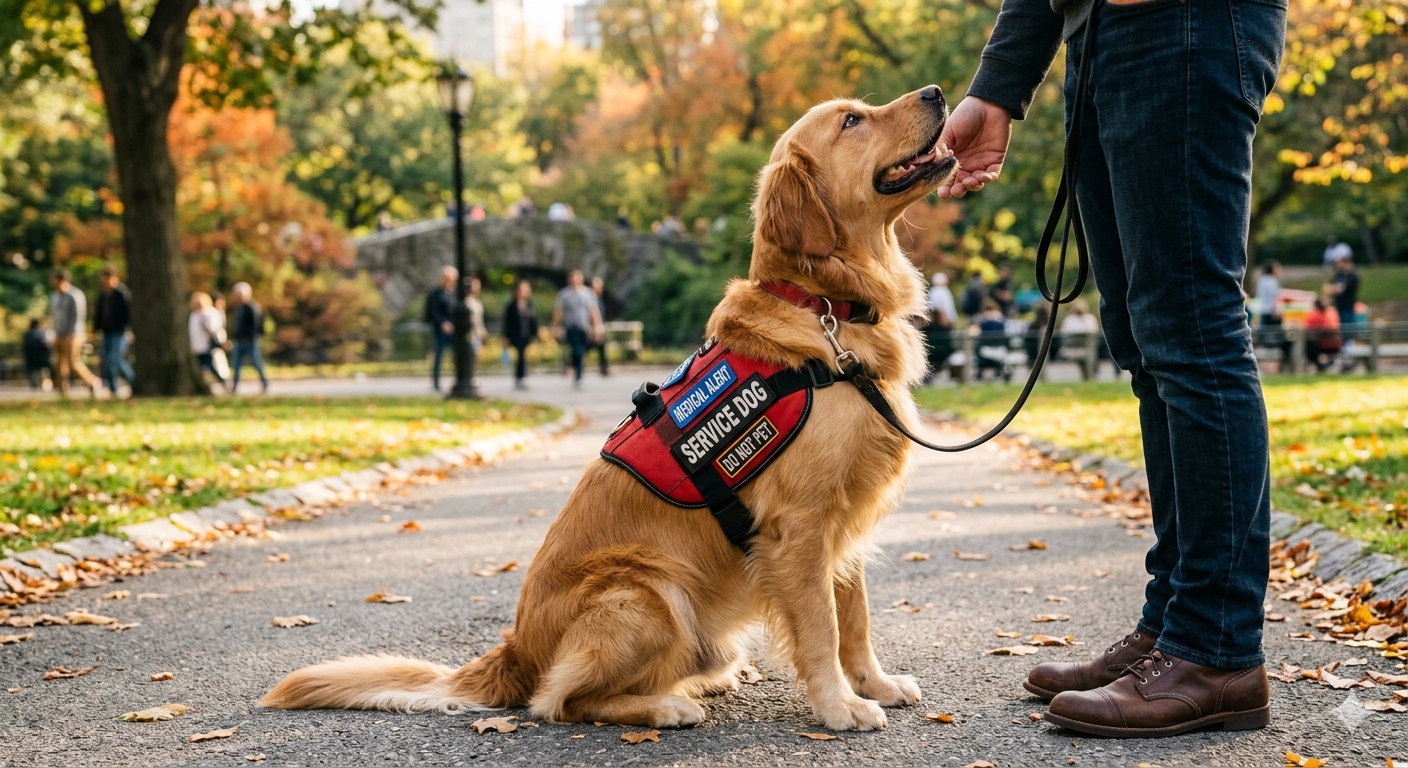
Service dogs calmly navigate crowded grocery stores. They gently interrupt panic attacks and retrieve dropped items for handlers in wheelchairs. When you see this, you are witnessing a miracle of modern animal training. But have you ever stopped to wonder about the true cost of a service dog? These dogs are much more than pets. They are highly trained lifesavers. They provide independence, safety, and profound companionship to individuals with disabilities.
But behind that calm demeanor and perfectly executed task lies a staggering reality: the cost of a service dog typically ranges from $15,000 to $50,000.
For many people, this price tag causes sticker shock. Why on earth does a dog cost as much as a brand-new car? To understand the answer, we have to look past the concept of a “pet” and understand that a service dog is a highly customized, extensively trained piece of medical equipment with a beating heart.
Let’s pull back the curtain and take a completely transparent look at why service dogs are such a significant—and entirely justified—investment, breaking down the training hours, veterinary care, and specialized gear involved.
1. The Foundation: How Genetics Impact the Cost of a Service Dog
The journey of a service dog begins long before the dog is even born. The cost of a service dog starts with elite genetics. Organizations and private trainers cannot rely on chance when lives are on the line.
Selective Breeding Service dogs are often bred specifically for temperament, health, and work ethic. Breeders invest thousands of dollars in health clearances for the parents—checking hips, elbows, eyes, and hearts to ensure the puppies have the best possible chance of a long, healthy working life. A purpose-bred puppy alone can cost between $2,000 and $3,500.
Early Neurological Stimulation (ENS). From the moment they are born, potential service puppies undergo Early Neurological Stimulation. This involves exposing the puppies to mild stressors (like temperature changes and different textures) to build their resilience. This early socialization requires round-the-clock dedication from experienced breeders and trainers. It lays the crucial groundwork for a highly resilient dog. This ensures they won’t easily spook in a loud, unpredictable public environment.
2. The Bulk of the Investment: Thousands of Training Hours
If you want to understand the true cost of a service dog, look at the clock. The absolute largest portion of the investment goes into the sheer volume of human labor and professional training required to mold a puppy into a lifesaver.
It takes roughly 18 to 24 months of continuous, daily training to prepare a service dog for public access and task work.
Puppy Raising (0-12 Months) During their first year, puppies are usually placed with volunteer puppy raisers or professional trainers. This phase focuses on foundational obedience, house manners, and extreme socialization. The dog must learn to ignore intense public distractions. A normal dog would lose its mind at dropped food or screaming children. Service dogs must also ignore blaring sirens and aggressive dogs. The cost of food, treats, toys, and travel for socialization during this year alone averages around $2,000 to $3,000.
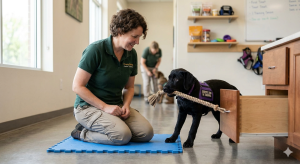
Advanced Task Training (12-24 Months) Once the foundational work is solid, the dog enters advanced training. This is where professional trainers—who command fair hourly wages for their highly specialized expertise—take over. Trainers spend hundreds of hours teaching specific, life-saving tasks customized to the future handler’s disability.
-
Mobility Dogs: Learn to safely brace a falling handler, open heavy doors, and retrieve specific dropped items, such as keys or medication.
-
Medical Alert Dogs: Learn to use their highly sensitive noses to detect dangerous drops in blood sugar (for diabetics) or chemical changes that precede a seizure or an anaphylactic reaction.
-
Psychiatric Service Dogs: Learn to perform deep pressure therapy, interrupt self-harm behaviors, and guide a disoriented handler to a safe space.
A professional trainer may spend 1,000 to 2,000 hours actively working with a single dog over its two-year curriculum. When you factor in a professional trainer’s hourly rate, it becomes immediately clear why the training alone accounts for $10,000 to $25,000 of the total cost.
3. Optimal Health: Comprehensive Veterinary Care
A service dog cannot do its job if it is not in peak physical condition. The cost of a service dog includes an incredibly rigorous, preventative healthcare regimen.
While a standard pet needs annual checkups and vaccines, a service dog’s body is their livelihood. They undergo extensive physical screenings that go far beyond the norm.
Pre-Clearance Medical Exams. Before an organization will invest in advanced training for a dog (usually around the 1-year mark), the dog must pass stringent medical clearances. This includes:
-
Orthopedic X-Rays: X-rays of the hips and elbows are sent to specialized organizations like the OFA (Orthopedic Foundation for Animals) to ensure there is no mild dysplasia that could cause pain later in life.
-
Cardiology Exams: Echocardiograms to rule out heart murmurs or defects.
-
Ophthalmology Exams: Complete eye exams by a veterinary specialist to rule out genetic blinding diseases.
These specialized clearances alone can easily cost $1,000 to $2,000. If a dog fails any of these tests, they are “career changed” and adopted out as a pet. The organization then loses the financial investment in that specific dog. The program must absorb the costs of the dogs that wash out. This further increases the overall price of the dogs that do graduate.
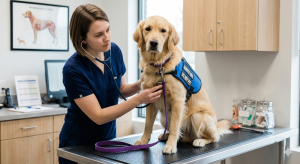
Ongoing Maintenance Throughout their training, dogs receive premium nutrition, monthly flea/tick/heartworm preventatives, vaccinations, microchipping, and spay/neuter surgeries. Keeping a high-performance working dog in optimal shape for two years requires an estimated $3,000 to $5,000 in veterinary and maintenance costs.
4. The Right Tools: Specialized Gear and Equipment
A carpenter needs a hammer; a service dog needs specialized gear. The equipment used by service dogs is not the standard nylon collar and leash you grab at the local pet store. It is highly specialized, custom-fitted, and built for heavy-duty, daily use.
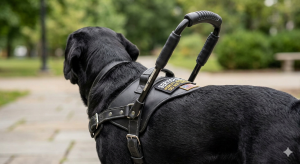
Working Vests and Harnesses: A service dog’s vest is its uniform. High-quality, breathable, and clearly marked vests can cost anywhere from $50 to $150. For mobility assistance dogs, the gear is even more complex. They require custom-fitted, ergonomic mobility and guiding harnesses made of premium leather or specialized synthetics. These harnesses are engineered to distribute weight safely across the dog’s shoulders so they can assist a handler without sustaining injuries. A custom mobility harness can cost between $300 and $800.
Boots, Mats, and Accessories. Because service dogs accompany their handlers everywhere, their paws must be protected from scorching summer pavement, freezing winter ice, and hazardous glass. A set of high-quality, durable dog boots costs around $60 to $100. Additionally, handlers invest in portable settling mats, specialized heavy-duty leashes, hands-free belts, and collapsible travel bowls.
When you tally up the cost of a working dog’s professional “wardrobe” and tools, you are easily looking at $500 to $1,500.
5. Handler Training and Team Placement
The final phase of the investment isn’t actually about the dog at all; it’s about the human. Handing over a fully trained service dog to a disabled individual isn’t like handing over a set of car keys.
Organizations and private trainers spend a minimum of one to three weeks engaged in intense “Team Training.” During this time, the handler must learn how to read the dog’s body language. They must maintain the training and give proper commands. Handlers also learn to navigate federal public access laws under the ADA.
This phase includes the handler’s lodging costs, the trainer’s time, public-access testing, and graduation expenses. Furthermore, reputable trainers offer the team lifetime support. They guarantee they will be there to troubleshoot any behavioral issues. This support lasts throughout the dog’s entire 8- to 10-year working life.
The Bottom Line: The True Cost of a Service Dog Equals Priceless Independence
When we break down the purpose-bred genetics, the thousands of hours of expert training, the premium veterinary care, the specialized gear, and the intense team matching, the true cost of a service dog makes complete sense.
Yes, $25,000 is a massive sum of money. But what is the price of independence?
For a veteran with severe PTSD who can finally walk into a crowded grocery store again, the dog is priceless. A young woman with a seizure disorder finds a lifeline in her dog, allowing her to finally live alone without fear of an unwitnessed medical event. And to a child with autism who can navigate the world calmly alongside a steady companion, the dog is nothing short of a miracle.
A service dog is not an expense. It is a profound, life-altering investment in human dignity, safety, and freedom.
If you want to help make service dogs more accessible to those in need, consider donating to an Assistance Dogs International (ADI) accredited non-profit organization in your area, such as Phoenix Rising. Every dollar goes toward offsetting these massive training costs and giving the gift of independence.
