
Service Dog Mobility vs Medical Alert Harnesses: The Ultimate Review
When you navigate the world with a working partner, understanding service dog mobility vs medical alert harnesses builds the foundation of a safe, effective team. At Phoenix Rising, our mission is Service Dogs Saving Lives. We understand that for many of our handlers—especially those recovering from trauma or managing physical disabilities—the gear you choose dictates the success of your dog’s tasks and your daily freedom.
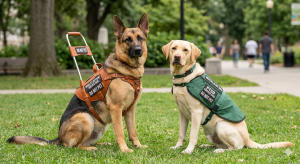
Selecting the wrong equipment represents more than an aesthetic mistake; it causes long-term physical injury for the dog and compromises the handler’s stability. In this guide, we break down the structural, functional, and safety differences to help you make an informed choice for your life-saving partner.
Why Distinguishing Between Mobility and Alert Gear Matters
For a service dog, the vest flips their “work mode” switch. For the handler, it acts as a tool of empowerment. When we discuss the differences between service dog mobility vs medical alert harnesses, we really compare the physics of physical support against the requirements of biological communication.
According to the ADA.gov Service Animal FAQs, federal law does not legally require vests, but handlers find them practically essential for smooth public access. More importantly, from a health perspective, you must tailor the harness to the specific skeletal demands of the dog’s tasks. If a dog performs physical bracing on a lightweight cape, they risk spinal misalignment. Conversely, a heavy leather rig can cause heat exhaustion in an alert dog.
Mobility Support Gear: The Architecture of Heavy-Duty Support
Mobility work involves intense physical interaction between the handler and the dog’s frame. This includes tasks like bracing for balance, momentum pulling for manual wheelchairs, and counterbalance for gait stability. Because these tasks demand immense physical effort, mobility assistance equipment requires significantly more robust construction than a standard medical cape.
The Science of Weight Distribution in Support Harnesses
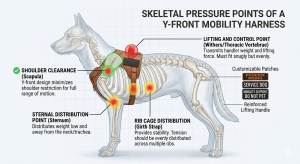
In the context of choosing between various support styles, mobility gear functions as a skeletal chassis. Unlike a standard walking harness, it distributes downward or forward pressure across the dog’s chest and shoulders rather than the sensitive spine or neck.
-
-
-
The Y-Front Design: This stands as the gold standard for mobility gear. It allows for full shoulder extension, which ensures the dog doesn’t develop a shortened gait or early-onset arthritis from restricted movement.
-
The Rigid Handle: Handlers use these for balance and bracing. Manufacturers craft these handles from steel or heavy-duty leather. Their design keeps them standing upright, so the handler can easily locate them without leaning over too far.
Risks of Using Improper Physical Support Equipment
At Phoenix Rising, we cannot stress this enough: only dogs that have cleared orthopedic x-rays should perform mobility work. If you use a mobility harness on a dog with underlying joint issues—or if you use a non-mobility vest for bracing—you invite catastrophic injuries. For more on canine ergonomics, we highly recommend reviewing the Assistance Dogs International (ADI) equipment standards.
Medical Alert Equipment: Prioritizing Speed, Scent, and Visibility
Medical alert dogs (for conditions like Diabetes, Seizures, or PTSD) possess a completely different set of requirements. Their gear needs a lightweight profile so the dog can quickly perform tasks like nudging, pawing, or jumping up to alert a handler to a physiological change.
Breathability and Endurance in Light-Duty Vests
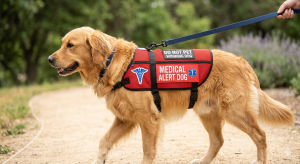
When evaluating the trade-offs of service dog mobility vs medical alert harnesses, the alert style heavily prioritizes airflow. This prevents the dog from overheating while working. Because alert dogs often work in high-stress, indoor environments for long hours, handlers typically choose mesh or lightweight nylon vests.
-
-
-
The Cape Style: This sits flat on the dog’s back, and thin straps secure it underneath. It offers maximum airflow and minimal restriction.
-
The Tactical/MOLLE Vest: Handlers who need to carry medical supplies, such as an EpiPen or glucose tablets directly on the dog, often prefer these rugged vests.
The Psychology of Patches on Medical Alert and PTSD Gear
A medical alert vest usually offers far more “real estate” for patches than a leather mobility harness. For handlers with PTSD, these patches create a silent barrier. They broadcast “Do Not Pet” or “Medical Alert” so the handler avoids stressful social interactions during a symptom spike. This “silent communication” plays a key role in recovery for many veterans and trauma survivors in the Phoenix Rising community.
Technical Specifications: Comparing Support and Alert Designs
Review the chart below to understand the distinct technical differences between service dog mobility vs medical alert harnesses:
Feature Mobility Harness Medical Alert Vest Primary Material Heavy Leather / Biothane Nylon / Mesh / Cotton Handle Type Rigid or Semi-Rigid (Bracing) Soft Webbing (Guide/Control) Weight 2–5 lbs 0.5–1 lb Physical Tasking Bracing, Pulling, Stability Scenting, Nudging, Guarding Pressure Points Chest and Shoulders Minimal Pressure
Safety Standards: Fitting Your Service Dog Uniform Correctly
Regardless of where you land in the choice of service dog mobility vs medical alert harnesses, your gear must meet these strict Phoenix Rising safety standards:
-
The Two-Finger Rule: You must be able to slide two fingers under every strap. A tight strap restricts breathing; a loose strap causes chafing.
-
Zero Spinal Pressure: For mobility dogs, the bridge of the harness must avoid the spine entirely. The robust rib cage and muscular shoulders should bear all the weight.
-
Hardware Check: Inspect your D-rings and buckles monthly. A failed buckle during a bracing task quickly causes a dangerous fall.
-
-
-
Hybrid Gear Solutions: Combining Mobility and Medical Alert Features
Many teams in the Phoenix Rising community operate as “hybrid” teams. For example, a veteran with PTSD may also have physical injuries requiring balance support. In these cases, selecting between service dog mobility vs medical alert harnesses often leads to a specialized hybrid solution.
These setups utilize lightweight mobility harnesses but add “loop” panels for medical patches. This combination allows the dog to perform physical bracing while maintaining the high visibility required for an alert dog. This smart design ensures the animal works effectively in dual roles without excessive weight dragging them down.
Final Thoughts on Professional Service Equipment
At the end of the day, the choice between service dog mobility vs medical alert harnesses comes down to the health and longevity of your dog. Your service dog acts as a life-saving partner, a companion in trauma recovery, and a vital bridge to the outside world.
By choosing gear that respects their anatomy and fulfills your specific needs, you ensure your partnership remains strong for years to come. At Phoenix Rising, we don’t just train dogs; we foster the bond that empowers handlers to rise again.