
Service Dog Gear and Maintenance: Practical Advice for Handlers
Navigating the world with a life-saving partner requires more than just a strong bond and high-level training; it requires a deep understanding of service dog gear and maintenance. While the dog’s skills are the heart of the operation, the equipment is the bridge that allows those skills to be deployed safely and effectively in a variety of public environments. For the team at Phoenix Rising, we know that high-quality, well-maintained gear isn’t just about aesthetics—it’s about ensuring that Service Dogs Saving Lives can do their jobs without distraction, discomfort, or equipment failure.
In this guide, we dive deep into the world of service dog gear and maintenance, offering practical advice for current handlers looking to upgrade their kit and aspiring handlers preparing for their first partner.
1. The Foundation of Service Dog Gear and Maintenance
Before you worry about high-tech patches and custom-colored capes, you must master the basics of control and communication. In the realm of service dog gear and maintenance, the “basics” are your primary safety net.
Selecting Quality Service Dog Equipment
Your dog’s collar is the primary point of physical contact and a vital piece of working dog supplies. For a service dog, this isn’t just for holding ID tags; it’s a tool for subtle communication.
-
Flat Collars: The standard for most teams. We recommend heavy-duty nylon or Biothane. Biothane is a favorite in the handler gear care community because it is waterproof, stink-proof, and incredibly easy to sanitize.
-
Martingales: Excellent for breeds with narrow heads who might accidentally slip out of a standard collar when backing up. It provides a gentle, limited-slip tension that ensures security without the harshness of a choke chain.
- Head Halters: These offer superior control for handlers with limited upper body strength. However, proper assistance dog tool care involves ensuring these are fitted perfectly to avoid putting pressure on the dog’s eyes or delicate facial nerves.
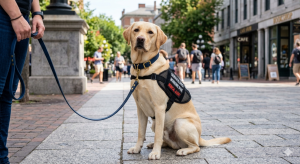
Leashes and Connectors: Essential Handler Gear Care
A leash is your physical connection to your partner. For effective service dog gear and maintenance, a multi-functional approach to leashes is best:
-
Hands-Free Leashes: Often worn around the waist or cross-body. This is a game-changer for handlers managing mobility aids or medical episodes.
-
Traffic Leads: These are short handles (12-18 inches) that clip directly to the harness. They are vital for maintaining tight control in crowded elevators or airplanes.
-
Material Choice: Leather leashes are durable and “break in” beautifully over time, but they require more maintenance (conditioning) for service animal kits than their synthetic counterparts.
2. Professional Standards for Service Dog Gear and Maintenance
While the Official ADA Service Animal FAQ clarifies that a vest is not a legal requirement, it is arguably the most important piece of service dog equipment upkeep for a smooth public experience.
Choosing the Right Vest for Service Dog Maintenance
A vest acts as a “Do Not Disturb” sign. It signals to the public that the dog is a medical device, not a pet.
-
Mesh Capes: Essential for teams in hot climates. Overheating can cause a service dog to “shut down,” so breathability is a priority in the maintenance of working-dog equipment.
-
Tactical Vests: Often used by larger breeds, these vests offer MOLLE attachments for carrying medical supplies—a key part of service-animal kit maintenance.
-
Padded Harness Vests: Ideal for dogs that perform light bracing. These offer more surface area to distribute pressure across the dog’s chest and back.
The Impact of Proper Fit on Service Dog Maintenance
Proper fit is paramount. Ensure the vest does not interfere with the dog’s shoulder movement or rub against their armpits (the “axilla”). A poorly fitted vest can cause long-term joint issues, meaning that service dog gear and maintenance are a health priority, not just a logistical one. If your dog is constantly adjusting or scratching at their gear, the “maintenance” required might be a resize or a change in material.
3. Specialized Service Dog Gear and Maintenance for Tasking
Service dogs are as diverse as the disabilities they mitigate. Their gear should reflect their specific tasks to ensure longevity and safety.
Mobility Harnesses and Orthopedic Service Animal Kit Maintenance
If your dog provides physical support, your gear requirements are much more stringent. You should consult the IAADP Equipment Resources to ensure your harness is orthopedically safe.
-
Hard-Handle Harnesses: Used for guide work or bracing. The handle should be at a height that allows the handler to maintain a neutral posture.
-
Maintenance Tip: Check the rigid parts of these harnesses for cracks or warping. Any change in the structure can translate to uneven pressure on the dog’s spine.
Medical Alert Tools and Handler Gear Care
For handlers with POTS, diabetes, or PTSD, gear might include specialized alert tools.
-
Custom Patches: Clear signage, such as “Medical Alert: Do Not Pet,” helps prevent the public from distracting a dog during a life-saving alert.
-
Patch Maintenance: Keep patches clean! Dirt-covered or frayed patches are hard to read and can lead to more public confrontations.

4. Seasonal Service Dog Gear and Maintenance Strategies
Proper service dog gear and maintenance must account for the weather. If the dog is uncomfortable, the dog cannot work at 100% capacity.
Winter Protection and Working Dog Equipment Upkeep
-
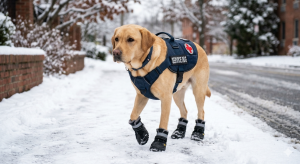
Boots: Salt and de-icing chemicals used on sidewalks can cause chemical burns on a dog’s paw pads. High-quality boots are a non-negotiable part of handler gear care in northern climates.
-
Coats: Short-haired breeds or dogs with low body fat need insulation. A cold dog is a distracted dog.
Summer Heat and Service Animal Kit Maintenance
-
Cooling Vests: These use evaporative cooling to keep the dog’s core temperature down.
-
Maintenance Tip: Always rinse cooling gear after use to prevent mildew, a common issue in service dog gear.
-
Paw Wax: If boots are too cumbersome in the heat, paw wax provides a temporary barrier against hot asphalt, though it requires frequent reapplication as part of your assistance dog tool care.
5. A Weekly Checklist for Service Dog Gear and Maintenance
Maintenance isn’t just about cleaning; it’s about risk management. An equipment failure in a high-stress public environment can be catastrophic.
The Weekly Hardware Inspection
Set aside ten minutes every week for this service dog equipment upkeep audit:
| Component | What to Check | Maintenance Action |
| Stitching | Fraying at the leash and handle attachment points. | Repair or replace immediately. |
| Buckles | Hairline cracks in plastic; “snap” strength. | Replace if they feel “soft” or loose. |
| Metal Snaps | Spring fatigue in bolt snaps. | Lubricate or replace if they stick open. |
| Velcro | Hair and lint buildup. | Clean with a stiff brush to restore grip. |
| Biothane/Leather | Cracking or “tackiness.” | Clean and condition to maintain flexibility. |
Cleaning Protocols for Better Handler Gear Care
A dirty service dog vest reflects poorly on the handler.
-
Nylon/Fabric: Hand wash in warm water with a scent-free, hypoallergenic detergent. Air-dry only—dryers can melt reflective stripping and compromise the nylon’s structural integrity.
-
Grooming the Gear: Use a lint roller daily on your dog’s vest. It sounds small, but removing excess hair from the gear keeps the team looking professional and prevents the “doggy” smell from setting in.
6. Grooming: The Human Side of Service Dog Maintenance
As we always say at Phoenix Rising, the dog is the most important part of the kit. The AKC Guide to Responsible Dog Ownership notes that grooming is a health requirement.
-
Nail Maintenance: Keep nails short enough that they don’t click on the floor. Long nails can cause a dog to lose traction on slick floors, potentially injuring their joints and making them hesitant to work.
-
Dental Health: Fresh breath is part of being a good “neighbor” in public. Dental wipes or daily brushing are essential for maintaining a service dog.
-
The “Bath” Rule: A working dog should be neutral-smelling. If your dog has a strong odor, it can be a legitimate reason for a business to ask the team to leave under ADA guidelines.
Conclusion: Investing in Your Independence
Selecting the right service dog gear and maintenance routine is an investment in your independence. By keeping your equipment clean, safe, and professional, you ensure that your partner can focus on what matters most: Service Dogs Saving Lives.
Whether you are just starting your journey or are a veteran handler, remember that your gear is an extension of your team. Treat it with the same respect you treat your partner, and it will serve you faithfully for years to come.